Language

Views: 0 Author: Site Editor Publish Time: 2026-07-07 Origin: Site


Acquiring a cooling unit never represents just a simple hardware purchase. It acts as critical infrastructure dictating your product quality, regulatory compliance, and operational margins. Dairy processing involves incredibly high stakes every single day. Raw milk leaves the cow at approximately 101°F. If you do not cool it rapidly, bacterial growth explodes exponentially. This directly leads to rejected shipments and significant financial loss. Additionally, cooling processes consume a massive share of your farm's energy overhead. Strict sanitation mandates leave no room for error. Agencies enforcing the Pasteurized Milk Ordinance (PMO) demand absolute precision. This guide provides a structured evaluation framework. We will help facility managers and farm operators select the right equipment. You will learn how to assess capacity requirements, technical specifications, and physical form factors. Armed with this knowledge, you can make a procurement decision supporting long-term dairy success. You will protect your yield and optimize your processing facility.
Proper sizing requires factoring in current peak production, collection frequency, and a 20% future-proofing buffer.
Material quality (specifically an SS304 milk tank) and automated Clean-in-Place (CIP) systems are non-negotiable for long-term sanitation and compliance.
Cooling efficiency must align with local regulatory standards (e.g., dropping milk temperature to 39°F within the mandated time frame).
A primary business challenge in dairy operations revolves around rigorous bacterial control. Inadequate chilling leads directly to elevated bacteria counts. Industry assessors measure this using the Standard Plate Count (SPC). High SPC levels trigger immediate quality alerts. Processing plants will reject substandard shipments. This erodes your profit margins instantly. You must preserve the integrity of the raw product from the moment milking finishes.
Energy consumption presents another major operational hurdle. Chilling raw liquid demands heavy, continuous electrical usage. It often accounts for the largest portion of a dairy farm's electrical load. Inefficient systems drain your operational budget month after month. Older compressors run continuously during peak summer heat. You need equipment running at peak performance. Modern variable speed technology can mitigate these heavy electrical draws.
How do we define a successful procurement? First, the equipment must deliver reliable, rapid temperature control under varying environmental conditions. Second, it should integrate seamlessly into your existing milking parlor setup. Finally, verifiable compliance ensures you pass strict industry sanitation audits. A well-chosen milk cooling tank tackles all these criteria simultaneously. It protects your yield, reduces your monthly utility bills, and keeps daily operations highly profitable. Facility managers must view this as a protective operational shield rather than a static holding vessel.
Proper capacity planning prevents disastrous bottlenecks during peak milking seasons. You must calculate your volume requirements carefully. Undersizing leads to warm blending, while oversizing wastes electrical power. Follow this precise sizing logic:
Determine your peak daily yield during the most productive spring flush season.
Multiply this yield by the maximum number of days between collection pickups.
Add a strict 20% safety buffer to accommodate unexpected delays or future herd expansion.
Let us consider a practical example. If you produce 1,000 gallons daily and trucks collect every other day, your baseline is 2,000 gallons. Adding the 20% buffer brings your required capacity to 2,400 gallons.
You must also distinguish between your primary cooling vessel and a secondary dairy storage tank. A primary unit handles immediate temperature reduction. A secondary unit holds already processed batches or manages overflow during unexpectedly heavy production days.
Next, evaluate your physical space and orientation constraints. Buildings present unique architectural limitations.
Horizontal Orientation: A horizontal cooling tank works best for facilities offering ample floor space. It suits older buildings requiring strict height restrictions. Operators generally find these units easier to access. You can perform manual visual inspections and interior spot checks without specialized ladders.
Vertical Orientation: Vertical units provide ideal solutions for high-capacity needs inside limited footprints. However, you must conduct a rigorous structural assessment first. Heavy vertical loads demand reinforced concrete flooring. You also need sufficient ceiling clearance for agitator shaft removal during deep maintenance.
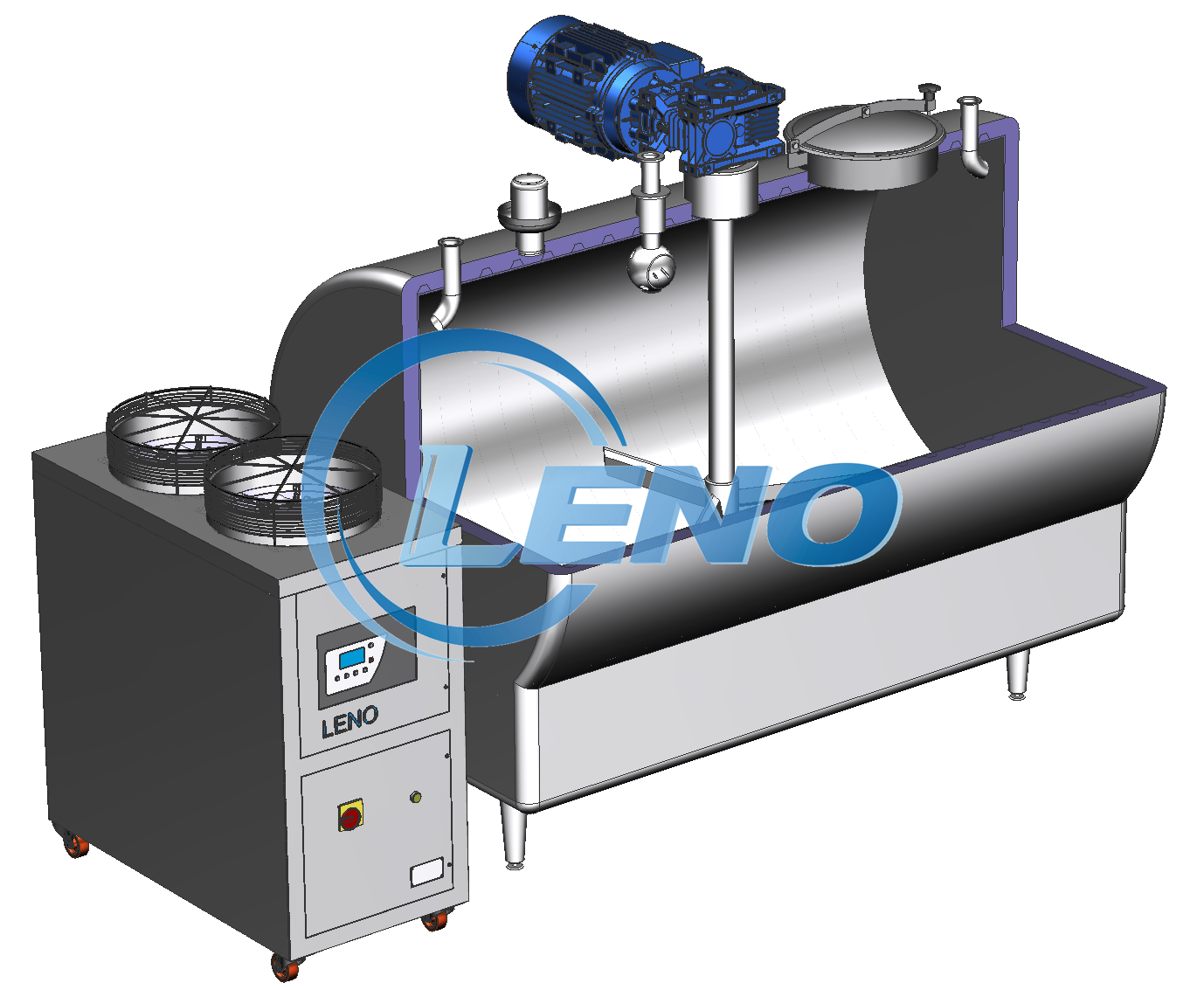
You must carefully evaluate build quality and technical specifications. These dimensions dictate longevity, sanitation, and daily performance.
First, consider material and build quality. Corrosive lactic acid and harsh cleaning chemicals destroy inferior metals quickly. Therefore, acquiring an SS304 milk tank remains an absolute necessity. SS304 stainless steel resists pitting from strong alkaline detergents and acid sanitizers. Some niche operations processing highly acidic fluids might upgrade to SS316. Regardless of the exact grade, look for robust double-wall construction. High-density polyurethane foam insulation injected between these walls prevents thermal loss. Good insulation keeps the liquid cold even during prolonged power outages.
Next, analyze the available cooling mechanisms. We primarily see two distinct cooling methods utilized in the commercial dairy industry.
Cooling System Type | Mechanism Overview | Best Operational Use Case |
|---|---|---|
Direct Expansion (DX) | Refrigerant runs through evaporator plates welded to the inner vessel to chill the liquid directly. | Standard farms needing efficient, steady temperature drops for consistent, moderate milking speeds. |
Chilled Water / Ice Bank | Uses an intermediate ice or water bank to rapidly absorb heat from incoming warm fluids. | Large operations handling sudden, massive volume influxes or utilizing fast parallel parlors. |
Agitation systems also require incredibly close inspection. Evaluate the agitator paddle design and specific motor speed. You need gentle, consistent agitation. It prevents butterfat separation and stops freezing on the evaporator plates. However, aggressive agitation churns the raw product. Churning breaks fat globules and increases free fatty acids, ruining flavor profiles.
Finally, assess automation and Clean-in-Place (CIP) features. Modern digital control panels monitor temperatures and maintain detailed alarm logs. Automated CIP compatibility reduces human manual labor errors. It sequences the pre-rinse, alkaline wash, acid rinse, and final sanitization steps perfectly. This ensures thorough, repeatable sanitation cycles every single time.
Dairy operations face intense regulatory scrutiny globally. Your equipment must align perfectly with established industry standards. Public health depends directly on these rigid sanitation protocols.
Industry benchmarks establish strict, non-negotiable design parameters. Equipment should meet 3-A Sanitary Standards or your regional equivalents. These standards dictate fabrication methods ensuring seamless, easily cleanable interior surfaces. Inspectors look for perfectly polished welds. They check for radius corners preventing hidden bacterial buildup. Any microscopic crevice can harbor dangerous pathogens.
Cooling time regulations represent another critical compliance hurdle. You must verify the rapid chilling capability of your system. It needs to meet local Pasteurized Milk Ordinance (PMO) rules. For example, PMO mandates chilling blended raw product to 45°F or less within two hours of milking. Slower chilling cycles risk severe bacterial blooms. You must ensure your compressor sizing handles your specific inflow rate.
Furthermore, you must maintain strict audit readiness constantly. Health inspectors and quality assurance teams demand documented proof of compliance. Look for electronic control systems offering continuous data logging. They record detailed temperature histories over time. They log wash cycle temperatures and durations. This traceability proves invaluable during unexpected health audits. It defends your operational integrity and protects your farm's licensing.
Purchasing the hardware only solves part of the logistical puzzle. You must prepare for installation challenges and hidden operational risks. Many buyers overlook site readiness until delivery day arrives.
Site preparation demands careful technical assessment. Evaluate your existing electrical infrastructure thoroughly. Does your facility support single-phase or three-phase power? Heavy-duty refrigeration compressors almost exclusively require three-phase connections. Upgrading rural electrical grids costs thousands of dollars. Additionally, calculate the floor load-bearing capacity before making a final purchase. A full vessel weighs tens of thousands of pounds. Weak concrete slabs will crack under this immense concentrated pressure.
Retrofitting risks often surprise veteran farm operators. Integrating a modern electronic unit into an older milking parlor poses unique challenges. You might struggle connecting new CIP systems to legacy pipelines. Existing external compressors might lack the necessary output for modern expanded capacities. You must verify compatibility between old and new components.
Finally, acknowledge everyday mechanical maintenance realities. Certain moving components fail more frequently than stationary parts. Agitator motors, compressor valves, and CIP spray balls represent very common failure points. You must evaluate the physical accessibility of these parts. Easy access allows routine maintenance without causing extended operational downtime.
Selecting the right vendor proves just as critical as selecting the equipment itself. You need reliable partners supporting your daily continuous operations.
Prioritize aftermarket support above almost everything else. Seek manufacturers or regional distributors demonstrating a proven track record. They must offer rapid replacement parts availability. They should also maintain local technician networks nearby. In dairy processing, downtime directly equals spoiled inventory. You cannot wait weeks for proprietary replacement parts shipped from overseas.
You must also perform a strict warranty analysis. Scrutinize the fine print closely. Determine exactly what the warranty covers and what it excludes. Understand the difference between the compressor lifespan and structural integrity coverage. Compressors often carry shorter guarantees than the stainless steel shell. Check if the warranty covers emergency labor costs or freight for replacement parts.
Define your request for proposal (RFP) process clearly. Advise your purchasing team to request detailed schematic drawings. Ask vendors for verified cooling performance data sheets based on your specific ambient temperatures. Always request references from similar-sized regional dairy operations. Speaking to current local users reveals true real-world equipment performance.
Choosing the right dairy equipment requires a careful, calculated balancing act. You must align immediate spatial constraints alongside long-term sanitary reliability. An optimized chilling setup protects your product from harmful bacteria. It keeps your farm compliant with strict regulatory standards. It streamlines your daily wash routines.
Take action immediately to optimize your facility. Audit your current chilling times and track your peak daily yields accurately. Project your future volume capacity needs for the next five years. Evaluate your electrical infrastructure and floor space limitations. Once you gather these operational metrics, request specialized quotes from experienced equipment engineers. Taking these proactive steps secures your dairy processing infrastructure. It ensures higher product quality and steady profitability for decades to come.
A: Direct expansion (DX) systems use refrigerant plates to cool the milk directly upon contact. They suit steady, average production flows. Chilled water systems utilize an intermediate ice or water bank. This method chills the liquid much faster, making it perfect for massive, sudden influxes of volume typical in large-scale dairy operations.
A: An SS304 milk tank provides the perfect balance of cost-effectiveness and supreme durability. This grade of stainless steel creates a non-porous, food-grade surface. It effectively resists corrosion from harsh lactic acid and aggressive daily cleaning chemicals. This ensures maximum sanitation and compliance without breaking your procurement budget.
A: A commercial unit typically lasts 15 to 20 years. Many operators see lifespans exceeding two decades. You must perform regular mechanical maintenance to achieve this longevity. Strict adherence to daily Clean-in-Place (CIP) protocols prevents corrosive buildup and protects the structural integrity of the stainless steel shell.
A: You generally install horizontal tanks indoors due to their wide footprint and maintenance access requirements. Installing one outside demands heavy-duty weatherproofing and specialized external insulation to prevent temperature fluctuations. Most outdoor installations utilize tall, vertical silo-style vessels specifically engineered for exterior environments.


