Language

Views: 0 Author: Site Editor Publish Time: 2026-07-02 Origin: Site


Selecting commercial kitchen and processing equipment carries immense operational stakes. You rely heavily on these large-scale units to maintain daily workflows. They guarantee product consistency across massive batches. Choosing the wrong heating method severely disrupts your facility. The downstream effects of a poor selection include production bottlenecks, excessive utility draw, and inconsistent product quality. The decision rarely centers on finding a universally superior technology. Instead, you must carefully align the heating method with your facility's existing infrastructure. You must also account for specific production volumes and strict operational constraints. Overlooking these fundamental factors leads to permanent inefficiencies.
We provide a clear, engineering-aligned framework to evaluate both technologies. This guide focuses strictly on operational scalability, facility readiness, and daily output performance. You will learn how to match unit configurations to your unique processing demands. By analyzing heating dynamics and structural requirements, this guide empowers you to make an informed, data-backed selection.
Infrastructure dictates the choice: A steam heating jacket kettle is typically the most efficient choice for high-volume operations, provided the facility already has a centralized boiler system.
Upfront vs. Long-term costs: An electric heating kettle offers a lower barrier to entry (no boiler required) but incurs higher long-term utility costs, especially at scale.
Heating dynamics differ: Steam provides rapid, evenly distributed heat transfer, while electric models have slower heat-up and recovery times.
Configuration matters: Both heating types can be integrated into a tilting kettle or an agitator kettle depending on product viscosity and unloading requirements.
Evaluate your boiler infrastructure first. A commercial boiler stands as your primary technical constraint. You must check whether your facility supports direct steam generation or requires self-contained units. Running off an external boiler, known as direct steam, feeds pressurized steam directly from a central plant. Closed-loop systems generate heat locally within the unit housing.
Analyze your utility load carefully before proceeding. High-capacity electric units pull significant electrical amperage. A large industrial unit might require dedicated high-voltage service that your building lacks. You must compare this electrical draw to the natural gas resources needed for a central boiler.
Space and ventilation requirements also dictate your choice heavily. A central boiler room demands substantial square footage. It requires specialized exhaust systems to handle combustion gases. You must account for HVAC make-up air regulations in your building code. Conversely, upgrading high-voltage electrical panels requires different spatial planning. Upgraded panels often consume valuable wall space in tight production environments.
Best Practices for Facility Audits:
Review current panel capacity with a licensed commercial electrician.
Measure the physical footprint available for dedicated boiler rooms.
Check local municipal codes for high-pressure steam vessel regulations.
Assess your HVAC system's capacity for handling latent ambient heat.
You must align your facility capabilities before finalizing any equipment decisions. A mismatch here causes severe installation delays.
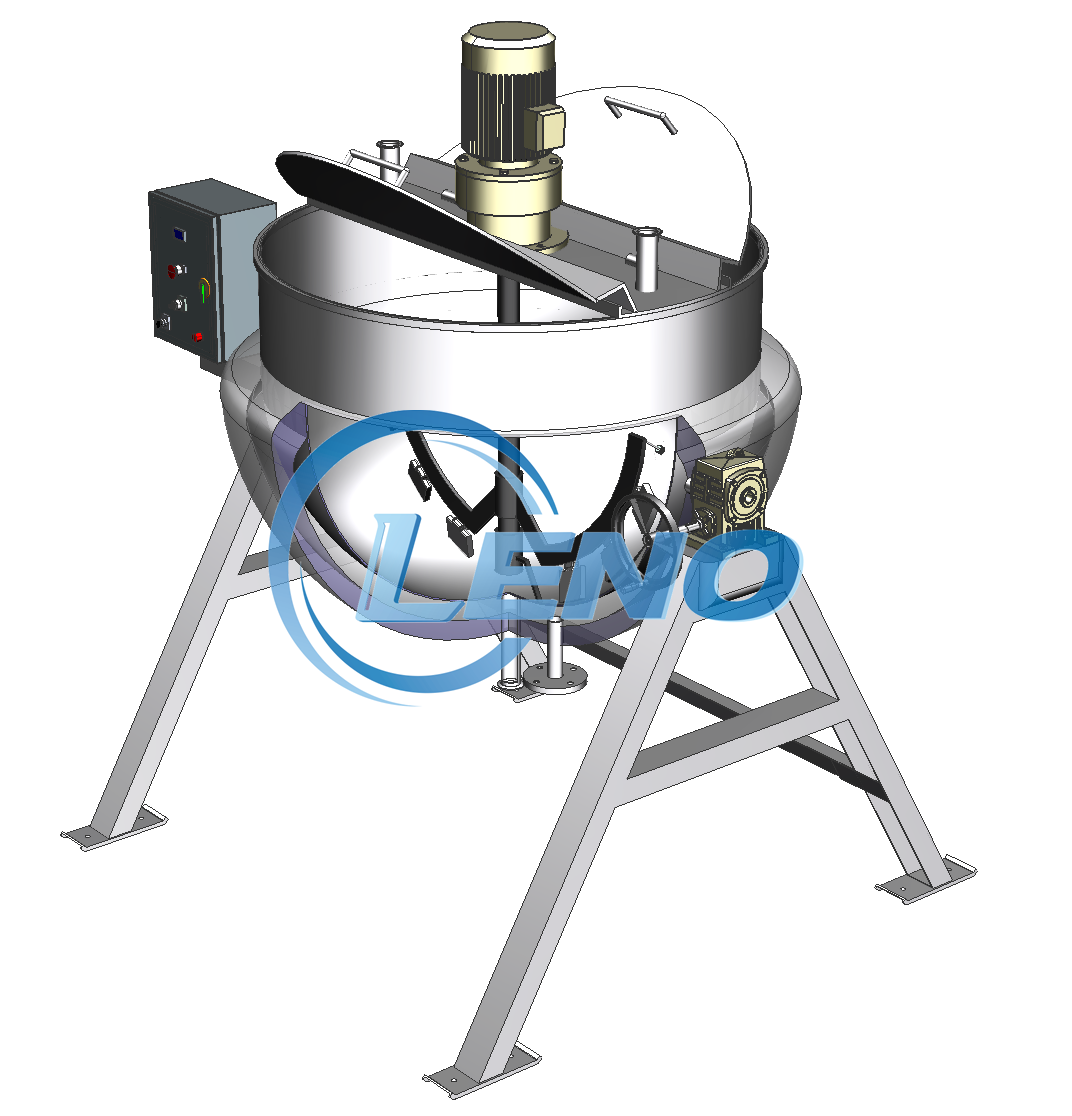
How does a steam heating jacket kettle actually work? Latent heat transfer occurs inside the engineered jacket. This mechanism provides near-instantaneous surface heating. The steam condenses into water upon contact with the cooler inner wall. It releases massive thermal energy directly into the inner vessel.
The performance advantages remain undeniably clear for large processors. You achieve significantly faster boiling times. The system delivers much quicker temperature recovery after you drop cold ingredients into the batch. Operators enjoy precise temperature modulation. They simply adjust the steam pressure valve to raise or lower the heat instantly. Furthermore, this method offers superior scalability. Industrial batches exceeding 100 gallons perform exceptionally well under high-pressure steam heating.
However, you face strict implementation risks. Strict adherence to pressure vessel compliance is absolutely mandatory. You must follow guidelines like the ASME boiler and pressure vessel codes. Maintenance demands constant attention from skilled technicians. Technicians must regularly service steam traps, pressure relief valves, and internal piping. Boiler descaling remains a continuous chore in hard-water regions.
Common Mistakes to Avoid: Neglecting regular steam trap inspections traps condensate in the jacket. This ruins heat transfer efficiency and increases batch processing times. Watch out for potential steam leaks across older fittings. A compromised valve or degraded pipe joint can cause severe, localized safety hazards. Kitchen staff working near live steam lines require comprehensive safety training to avoid accidental burns.
An electric heating kettle relies on submerged resistance heating elements. These specialized elements sit in a self-contained thermal fluid. This fluid is usually treated water or synthetic thermal oil, sealed securely within the jacket. As electricity flows, the elements heat the fluid. The fluid then transfers that warmth evenly to the cooking vessel.
This design offers distinct performance advantages for specific environments. Installation feels practically plug-and-play if you possess adequate electrical service. Small-to-medium operations benefit immensely from this simplicity. Remote sites, independent breweries, or ghost kitchens without access to complex steam lines rely heavily on this configuration. You manage significantly fewer moving parts overall. You eliminate specialized maintenance tasks like monitoring external steam traps and boiler blowdowns.
Despite these benefits, critical limitations exist. Heat transfer rates fall behind direct steam capabilities. Your fluid heat-up takes much longer from a cold start. You also risk catastrophic heating element burnout if internal fluid levels drop too low. This reality requires vigilant jacket monitoring during extended operation.
What to Watch Out For: Continuous, large-scale production drains massive amounts of electricity. Processing heavy daily volumes stretches your electrical grid. Intermittent batch processing works beautifully here. However, back-to-back industrial boiling stresses the internal elements and slows down your turnover rates compared to instantaneous steam.
Your specific product's viscosity changes everything during equipment selection. Highly viscous items behave differently under heat. Thick soups, heavy syrups, caramel, or distillation mashes require constant mechanical movement. In these demanding scenarios, integrating an agitator kettle becomes absolutely essential. Steam's even heat distribution prevents localized scorching far better than electric resistance heating. Slow, methodical mixing in a high-heat environment demands uniform surface temperatures. Steam surrounds the hemispherical vessel perfectly evenly. Conversely, electric elements can sometimes create subtle hot spots near the base if the fluid degrades.
Ergonomics and unloading procedures also dictate your ideal configuration. Integrating a tilting kettle mechanism allows operators to pour heavy batches safely. This prevents repetitive strain injuries and improves workplace safety. Self-contained electric models integrate very easily into a tilting configuration. They do not require flexible, high-pressure steam line connections to pivot safely. Direct steam tilting units require highly specialized rotary joints. These complex joints prevent live steam leaks during the mechanical tilt cycle.
You must eventually choose between stationary and trunnion mounts. Stationary mounts work best for highly liquid products like broths or clear beverages. You drain these liquids easily through a bottom tangent draw-off valve. Trunnion mounts, however, support the massive pivot required for tilting. Your chosen heating medium heavily influences which mounting style remains practical. Piping high-pressure steam into a moving trunnion requires precise mechanical engineering and rigorous daily inspections.
When assessing these complex systems, your decision hinges purely on production demands and facility infrastructure. You must evaluate the long-term operational trajectory rather than just the immediate physical installation. Matching the thermal output to your daily shift requirements prevents costly bottlenecks.
When to Choose Steam Technology:
Your facility already operates a fully functioning central boiler system.
Production schedules require rapid, continuous batch turnover without recovery delays.
Processing capacities consistently exceed 60 to 80 gallons per individual unit.
You process highly sensitive products prone to localized scorching.
When to Choose Electric Technology:
You manage new facility builds lacking central boiler infrastructure entirely.
Your menu features lower-volume, intermittent batch processing.
Your operations prioritize independent, decentralized equipment setups.
The facility operates in locations with restrictive municipal steam codes.
Below is an operational evaluation matrix to guide your facility planning:
Operational Evaluation Criteria | Steam Heating System | Electric Heating System |
|---|---|---|
Thermal Heat-Up Speed | Near-instantaneous surface heating | Gradual thermal fluid heating |
Industrial Scalability | Excellent for 100+ gallon industrial batches | Best suited for 10 to 60-gallon batch processing |
Facility Prerequisite | Central boiler and rated steam line plumbing | Sufficient high-voltage dedicated electrical panels |
Maintenance Complexity | High (valves, traps, rotary joints, descaling) | Low (fluid level monitoring, element checks) |
The choice between electric and steam models remains a strict infrastructure and volume calculation. It is never just a simple feature preference. You must align your heating source with your building's mechanical realities. Installing superior technology in an incompatible building yields disastrous operational results.
To ensure long-term production success, follow these specific action-oriented next steps:
Audit your current facility utilities immediately to map out available electrical amperage and central boiler limits.
Consult closely with a licensed mechanical engineer regarding necessary ventilation, drainage, or panel upgrades.
Test your exact product viscosity under prolonged heat to determine your precise agitation and tilting requirements.
These proactive planning steps prevent frustrating installation delays. They secure seamless, highly profitable daily operations for your commercial processing floor.
A: No, converting these units is usually physically impossible. The mechanical realities prevent safe conversion due to strict jacket pressure ratings required for steam. Furthermore, electric jackets lack the necessary reinforced steam inlet and outlet ports. It is always safer and more practical to replace the entire unit rather than attempting a dangerous, non-compliant modification.
A: Standard daily cooking operation remains simple and does not require a specialized culinary operator. However, managing the overall system compliance is different. Boiler maintenance, steam line management, and safety valve testing require qualified facility technicians. You must schedule regular preventative maintenance with certified professionals to ensure ASME compliance and prevent hazardous steam leaks.
A: Both configurations offer similar, highly effective internal washdown capabilities. The internal stainless steel vessels clean up identically. The differences appear during exterior washdowns. Electric units require careful, restricted handling around sensitive electrical enclosures to prevent short circuits. Conversely, steam units demand safety monitoring of hot exterior steam pipes during the sanitation process.


