Language

Views: 0 Author: Site Editor Publish Time: 2025-12-10 Origin: Site


When it comes to production lines in industries like food, beverage, cosmetics, pharmaceuticals, and chemicals, one piece of equipment stands out as crucial: the mixing tank. Mixing tanks play an essential role in blending raw ingredients into finished products with consistent quality. Selecting the right mixing tank for your production line can drastically impact the efficiency, quality, and cost-effectiveness of your operations.
In this article, we’ll guide you through the key considerations for choosing the perfect mixing tank for your production needs. Whether you're scaling up your production or looking for specific customizations, we’ll help you make an informed decision.
A mixing tank is a vessel used to mix different ingredients together to create uniform mixtures. Depending on the product, these tanks are used in various industries, including food and beverage, cosmetics, pharmaceuticals, and chemicals. The goal of a mixing tank is to ensure that the ingredients are mixed thoroughly and consistently, improving both the quality and uniformity of the end product.
These tanks come in many sizes and configurations, depending on the production needs, and can feature additional components such as heating or cooling systems, agitators, and advanced mixing technologies.
A mixing tank consists of several essential components that define its performance and versatility:
Material: Most mixing tanks are made of high-quality stainless steel (SUS 304 or 316L) to withstand harsh conditions and ensure durability and hygiene.
Structure: The tank can be single-layer, double-layer, or even triple-layered, with a variety of design configurations to suit different mixing requirements.
Surface Treatment: Polished surfaces and smooth welds are crucial to prevent contamination and ensure easy cleaning.
Mixing Mechanisms: Different mixers, such as impellers, turbines, and high-shear mixers, are chosen based on the type of materials being mixed.
Choosing the right mixing tank size depends largely on your production scale. Tanks range from small-scale, laboratory-type models of around 50 liters to large, industrial-grade tanks capable of holding up to 20,000 liters or more.
Small-Scale Production: If you are a startup or producing small batches, a tank of 50L to 500L may be sufficient.
Mid-Scale Production: For businesses scaling up, consider tanks in the range of 500L to 5000L, which are typically used in food and beverage industries.
Large-Scale Production: Large-scale operations often require mixing tanks of 5000L to 20,000L for mass production, particularly in industrial applications.
Tank Size Range | Suitable for | Industry Example |
50L - 500L | Small-scale production | Laboratory, R&D, small beverage makers |
500L - 5000L | Medium-scale production | Food, beverages, cosmetics manufacturers |
5000L - 20,000L | Large-scale production | Pharmaceuticals, large food manufacturers |
The type of materials being mixed is a critical factor when selecting a mixing tank. Materials can vary from low-viscosity liquids (e.g., water or juice) to high-viscosity substances (e.g., creams, sauces, and adhesives). Understanding the material properties will help you choose the appropriate mixing technology.
Low-Viscosity Materials: For liquids such as juices, milk, or water-based solutions, a simple impeller mixer or turbine might suffice.
High-Viscosity Materials: For thicker materials like creams, pastes, or suspensions, consider tanks with anchor agitators or high-shear mixers to handle the mixing process efficiently.
Powders or Solids: If you're mixing powders or solid-liquid mixtures, a ribbon blender or screw conveyor may be necessary.
Some products, like sauces, creams, or chemicals, require precise temperature control during mixing. A jacketed mixing tank offers an excellent solution for these needs.
Full Jacket: The tank has a full jacket surrounding it, ideal for controlling temperature during mixing, especially for temperature-sensitive products like dairy or sauces.
Dimple Jacket: Dimple jackets provide even heat transfer and are often used when there is a need for more effective cooling or heating.
Coil Jacket: A coil jacket is used in tanks that require moderate heating or cooling, particularly for less heat-sensitive products.
These jackets can be heated using steam, electric heaters, or thermal oil, depending on the specific requirements of the product being mixed.
Jacket Type | Heating/Cooling Application | Ideal Use Case |
Full Jacket | Precise heating/cooling | Dairy products, sauces |
Dimple Jacket | Efficient heat transfer | Food, beverages |
Coil Jacket | Moderate temperature control | Chemicals, low-viscosity liquids |
Different products require different mixing speeds to achieve the desired consistency. The type of mixer and the speed of operation will determine the final product's homogeneity.
Impeller Mixers: Suitable for low-viscosity liquids that require moderate mixing.
Anchor Mixers: Designed for thick pastes and high-viscosity materials, providing slow, but thorough, mixing.
Turbine Mixers: Typically used for larger volumes or products that require both high shear and higher mixing speeds.
High-Shear Mixers: Essential for emulsions or products requiring uniform particle size distribution, like lotions, creams, or emulsified food products.
The mixing speed should be chosen based on the viscosity and consistency of the product to prevent over-mixing or damage to sensitive ingredients.
Maintaining hygiene and cleanliness is especially critical in industries like food, pharmaceuticals, and cosmetics. A mixing tank must be easy to clean and designed to prevent cross-contamination between batches.
CIP (Clean-in-Place) Systems: These systems allow for thorough cleaning without disassembling the tank.
Smooth Welds and Polished Surfaces: Smooth surfaces ensure no residual material remains after cleaning, and polished tanks reduce bacterial buildup.
Easy Access: Removable parts, such as manholes and lids, allow for better access for cleaning.
Hygiene Feature | Benefit | Industry Example |
CIP System | Ensures thorough cleaning | Food, pharmaceuticals, cosmetics |
Smooth Surfaces | Prevents contamination | Dairy products, food production |
Removable Parts | Easy access for cleaning | Pharmaceutical manufacturing |
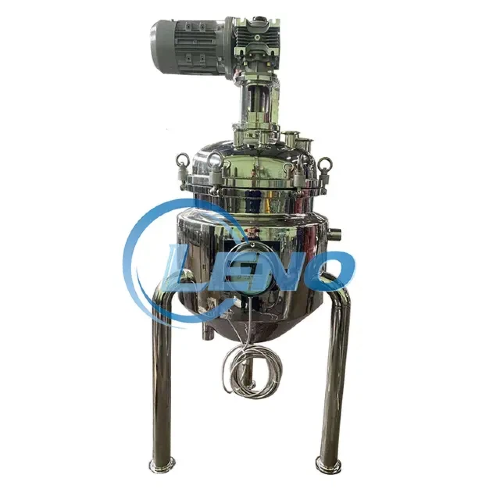
Many businesses require customized mixing tanks to fit specific needs. Customization allows for flexibility in terms of size, material, and functionality. Here are some common customization features:
Custom Tank Size: As mentioned, selecting the right size is essential, and manufacturers often offer customized tank sizes to meet your production needs.
Custom Mixer Types: Choose from impellers, turbines, or high-shear mixers to match your material’s mixing requirements.
Surface Finish: Depending on the regulatory requirements, surface finishes like mirror polishing may be needed for hygienic industries.
Custom tanks provide significant value by ensuring that your production line remains efficient, cost-effective, and compliant with industry standards.
Choosing the right manufacturer is just as important as selecting the right tank. Here’s what you should consider:
Quality Certifications: Ensure the manufacturer has relevant certifications (such as ISO 9001) that guarantee the quality and reliability of the products.
Customization Capabilities: Check if the manufacturer offers the flexibility to customize the mixing tanks according to your specific needs.
After-Sales Support: Good manufacturers offer robust after-sales support, including maintenance services and spare parts availability.
Industry Experience: Manufacturers with experience in your specific industry can offer more targeted advice and solutions.
Selecting the right mixing tank for your production line involves several crucial factors, including production volume, material properties, temperature control, mixing speed, and hygiene requirements. By carefully evaluating these needs, you can ensure that your production process remains efficient and cost-effective, while meeting industry standards.
At WenZhou Leno Machinery Co., Ltd., we specialize in providing high-quality mixing tanks tailored to the specific needs of your production line. Our tanks come in various sizes and configurations, designed to handle different materials, temperatures, and mixing speeds. Whether you require a basic model or a custom solution with precise temperature control, we offer a range of options that ensure consistent, high-quality results.
Our team is committed to delivering reliable products and exceptional customer service. If you're looking to optimize your production line with a high-performance mixing tank, we invite you to contact us. Our experts are ready to guide you through the selection process and help you choose the ideal solution for your business. Get in touch with us today to discuss your needs and explore how we can support your production goals.
A single-layer mixing tank is a simple vessel used for basic mixing. A double-layer mixing tank features an additional layer for heating or cooling applications, making it ideal for products that require precise temperature control.
The ideal mixing speed depends on the viscosity of your product. For low-viscosity products, moderate speeds work well, while high-viscosity materials require slower speeds to ensure proper blending.
Jacketed mixing tanks are necessary when temperature control is required. Full jackets provide precise heating or cooling, while coil and dimple jackets offer more moderate temperature control.
Ensure your tank has a CIP system, smooth welds, and polished surfaces. These features will make cleaning easier and reduce the risk of contamination between batches.
Yes, many manufacturers offer customization options for size, mixer type, and additional features like heating, cooling, and surface finishes, allowing you to tailor the tank to your needs.


