Language

Views: 0 Author: Site Editor Publish Time: 2026-07-12 Origin: Site


Transitioning from harvest to fermentation remains the highest-risk phase in commercial winemaking. Your chosen vessel directly dictates process control and defines final flavor profiles. Scaling up production introduces complex daily challenges. Facilities must balance rigid thermal control, aggressive cap management, and strict sanitation requirements. Failing here compromises your core winemaking philosophy. Poor choices lead to stuck fermentations or unwanted microbial spoilage.
We provide a comprehensive framework for evaluating commercial equipment based on exacting technical specifications. You will learn to match facility constraints and specific grape varietal needs to the ideal vessels. This systematic approach ensures reliable results across every single vintage. Making informed equipment decisions protects your raw material investment. It empowers your production team to focus purely on craft rather than battling inadequate hardware.
Vessel geometry and jacket configuration directly impact temperature stratification and yeast viability during peak fermentation.
Selecting between open-top, closed-top, and variable-capacity tanks depends heavily on your cap management strategy (reds) vs. oxygen exclusion needs (whites).
A premium stainless steel wine tank offers the highest ROI through inertness, lifespan, and automated clean-in-place (CIP) compatibility.
Accurate sizing must account for 20-30% headspace for cap expansion, not just total liquid volume.
A modern wine fermentation tank does far more than hold juice. It acts as an active, highly responsive tool. Winemakers rely on these precise vessels to navigate the precarious journey from sweet must to finished wine securely.
Yeast metabolism generates substantial exothermic heat. You must manage this heat diligently. Unchecked temperatures cause severe yeast stress, leading to sluggish or stuck fermentations. High heat also blows off delicate volatile aromatics rapidly. Precise temperature bands remain critically necessary. Cooler temperatures (50–60°F) preserve fruity esters in aromatic whites. Warmer temperatures (75–85°F) maximize phenolic and tannin extraction in robust reds. Advanced tanks feature automated cooling jackets to lock temperatures within optimal ranges effortlessly.
Different fermentation stages require distinct oxygen strategies. Early primary fermentation demands dissolved oxygen for yeast sterol synthesis. Later stages require strict oxygen exclusion to prevent oxidation. Tank seals and inert gas blanketing systems handle this transition smoothly. Blanketing systems inject argon or nitrogen to displace ambient air. Venting valves release carbon dioxide safely. They control oxidative exposure effectively during both primary and secondary fermentation phases.
Microbial spoilage ruins entire vintages rapidly. Seamless tank interiors prevent harmful bacteria from hiding. Any scratch or microscopic crevice offers a breeding ground for Brettanomyces. This rogue yeast creates undesirable barnyard aromas. Acetobacter exposure causes volatile acidity (VA), turning premium wine into vinegar. Sanitary welds eliminate these risks completely. Highly polished surfaces ensure cleaning chemicals reach every microscopic corner during routine washdowns.
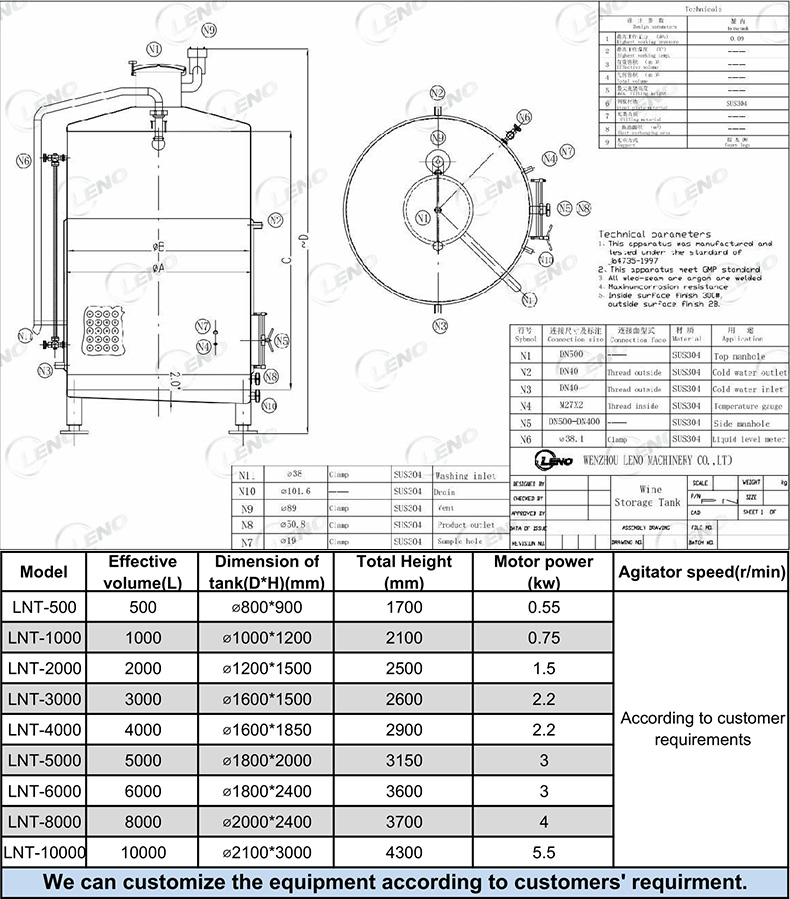
Selecting proper fermentation equipment shapes your entire production workflow. Winemakers must align their vessel types to specific grape varietals. Facility turnover rates also influence these fundamental design choices.
Vessel Type | Best Suited For | Primary Advantage | Key Limitation |
|---|---|---|---|
Closed-Top | Whites, Rosé, Large-Scale Reds | Complete oxygen exclusion & automated pump-overs | Difficult manual cap access |
Open-Top | Premium Reds (Pinot Noir, Syrah) | Easy manual punch-downs (pigeage) | High risk of fruit fly contamination |
Variable Capacity | Boutique batches, Fluctuating yields | Adaptable volume via floating lids | Pneumatic seals require constant monitoring |
Closed-top fermenters represent the industry standard for white wines, Rosé, and large-scale production. They provide total environmental isolation. This protects delicate juice from oxidative browning. Large commercial facilities integrate them easily into automated pump-over systems. High-turnover operations rely on these vessels for consistent, repeatable results across massive volumes.
Premium red grape wine production often requires intensive cap management. Open-top fermenters allow direct access for manual or mechanical punch-downs (pigeage). This gentle extraction method yields softer tannins. However, open tops introduce significant risks. You must enforce rigorous ambient sanitation. Fruit flies (Drosophila) carry bacteria directly into the must. Daily cellar cleaning becomes absolutely non-negotiable.
Boutique wineries managing fluctuating harvest yields favor variable-capacity tanks. A floating lid moves up or down based on juice volume. You inflate a pneumatic tube to seal the perimeter. This prevents unwanted oxygen contact for partial batches. They require high maintenance. Pneumatic seals remain prone to slow pressure leaks. Cellar crews must monitor the inflation levels daily.
A premium stainless steel wine tank dominates commercial cellars today. Oak and concrete hold historical charm. However, stainless steel delivers unmatched operational reliability. It provides consistent performance across decades of heavy use.
High-grade stainless steel (304 or 316L) remains completely neutral. It imparts zero flavor into the juice. Oak barrels contribute vanilla, spice, and tannins. Concrete sometimes shifts pH levels initially. Stainless steel guarantees the purest expression of the grape. Terroir shines brightly. Winemakers maintain total stylistic control over the final aromatic profile.
Stainless steel transfers heat exceptionally well. Dimple jackets wrap around the exterior shell. Glycol circulates rapidly through these jackets. The metal responds instantly to temperature adjustments. Rapid cold-crashing becomes effortless. Heat-stabilization happens efficiently. This high responsiveness prevents sudden temperature spikes during aggressive, peak fermentations.
Commercial food-grade standards demand strict sanitary environments. Stainless steel easily meets these rigid requirements. It resists corrosion from high-acid juice environments. Caustic cleaning chemicals do not degrade the surface. Citric acid neutralizations leave the metal entirely unharmed. A properly maintained stainless vessel lasts for decades.
Evaluating initial capital expenditure requires a long-term perspective. Stainless vessels demand a higher upfront financial commitment. Lower maintenance costs offset this initial expense quickly. They avoid the frequent replacement cycle of oak barrels. You skip the expensive micro-fissure repairs common in concrete eggs. The financial return becomes highly favorable over a twenty-year horizon.
Proper volume calculation prevents operational disasters. Sizing your grape wine tank requires significant foresight. You must analyze physical facility constraints and biological realities simultaneously.
Total liquid volume differs drastically from active fermentation volume. Fermenting juice expands aggressively. Carbon dioxide pushes grape skins upward continuously. This creates a thick, solid surface cap. Red wine ferments require up to 30% headspace. Without adequate room, the cap overflows the top hatch. White wines generate less foam. They require closer to 10% or 15% headspace. Always calculate maximum active volume before purchasing.
Wineries constantly battle limited floor footprint. Taller, narrower tanks save valuable square footage. Verticality alters the fundamental juice-to-skin contact ratio. A narrow tank creates a thicker, denser cap. This alters phenolic extraction dynamics heavily. Hard caps resist manual punch-downs. Shorter, wider tanks spread the cap out thinly. Extraction becomes gentler. Assess your facility ceiling height early.
Tank capacity must align directly to throughput rates. An oversized tank sits empty if your press works too slowly. Small tanks cause fruit backups on the crush pad. Follow these steps to match capacity effectively:
Calculate the maximum daily tonnage your crush pad processes.
Measure the exact output volume your press yields per hour.
Size your vessels to hold one full day of continuous processing.
Include a volume buffer for unexpected yield surges during peak harvest days.
Procurement teams must look beyond basic volume numbers. Shortlisting tank manufacturers requires assessing specific engineering details. Minor design differences heavily impact daily cellar operations and safety.
Verify jacket coverage remains proportional to total volume. Insufficient cooling area creates dangerous core temperature spikes. A massive tank needs multi-zone jackets. Winemakers often cool the bottom and warm the top simultaneously. Dual zones provide supreme thermal control during unpredictable fermentations.
Tank bottoms determine labor efficiency during emptying. Conical bottoms funnel pomace downward naturally. They speed up removal processes significantly. Sloped bottoms push material toward a front rectangular door. Racking clear wine off lees requires properly placed valves. Ensure manways fit standard human shoulder widths. Oval manways work best for general access. Rectangular doors sitting flush at the floor allow easy shoveling.
Require standard Tri-Clamp (TC) sanitary fittings everywhere. Threaded fittings trap dangerous bacteria. They belong nowhere near commercial winemaking. Evaluate sample valve placements carefully. Racking arms must rotate smoothly. Thermowells must reach deep into the liquid core. Operational ergonomics save hours of frustration during busy harvests.
Inspect interior seams closely. Insist on purged TIG welds exclusively. Manufacturers must polish every weld to a highly sanitary finish. Rough welds harbor microbial colonies permanently. Passivation treatments restore the protective chromium oxide layer. Check references regarding manufacturer weld consistency.
Here are essential best practices for evaluating manufacturers:
Request detailed CAD drawings before finalizing any purchase order.
Verify the exact grade of stainless steel utilized for both the shell and the jacket.
Confirm whether the manufacturer passivates the tank interior before shipping.
Avoid buying based solely on the lowest price; prioritize long-term durability.
A wine fermentation tank acts as a dynamic tool for thermal and microbiological control. It far exceeds basic storage functions. Procurement teams should project harvest volumes on a 5-year growth trajectory. Buying slightly larger equipment now prevents premature obsolescence later. Initiate technical consultations early in the calendar year. Request CAD drawings from reputable manufacturers immediately. Validate firm delivery lead times well ahead of the crucial harvest season to ensure smooth operations.
A: Grade 304 provides excellent durability for standard winemaking. Grade 316 contains molybdenum. This addition dramatically increases corrosion resistance. Winemakers handling high-salinity water or frequent high-acid additions often choose 316. It costs slightly more upfront but prevents long-term pitting in harsh chemical environments.
A: Yes, closed-top models serve perfectly for dual-use applications. Once primary fermentation finishes, you can rack the wine back into the clean vessel. Ensure you equip the tank featuring proper inert gas systems. Argon blanketing protects the resting wine from oxidative damage during extended maturation periods.
A: External dimple jackets offer superior sanitation and efficiency. Internal coils sit inside the juice, creating massive cleaning hurdles. Grape skins, seeds, and tartrates stick to internal coils constantly. Dimple jackets wrap the exterior shell, keeping the interior completely smooth. This design ensures rapid clean-in-place (CIP) compatibility.
A: Standard lead times typically span 3 to 6 months. Supply chain fluctuations delay specialized parts frequently. Always finalize your orders during the off-season. Ordering in January or February guarantees delivery long before autumn fruit arrives. Waiting until summer virtually ensures you will miss the harvest window completely.


