Language

Views: 0 Author: Site Editor Publish Time: 2026-06-14 Origin: Site


Sourcing processing equipment involves incredibly high stakes for manufacturers. A standard vessel is never just a simple container. It is a highly regulated piece of processing equipment critical to product safety, shelf life, and facility compliance. Many buyers mistakenly assume all stainless steel is automatically safe for consumption. The true distinction lies in precise material composition, microscopic surface finishes, and sanitary fabrication techniques. You must strictly adhere to these strict parameters to prevent hazardous bacterial growth. Facility managers and procurement teams should evaluate these tanks very carefully. You need to balance upfront capital expenditure against long-term operational reliability. This comprehensive guide breaks down exactly what you must know to make a compliant, safe, and effective purchasing decision.
Not all stainless steel is food-safe; specific alloys (primarily 304 and 316) combined with sanitary welds and specific surface finishes (Ra values) define "food grade."
Choosing between a 304 and 316 stainless steel tank depends strictly on the acidity and chloride levels of the stored product.
Evaluating a tank requires looking beyond volume, focusing heavily on Clean-In-Place (CIP) compatibility, drainage angles, and fitting standards.
Repurposing industrial or chemical storage tanks for food applications poses severe regulatory and contamination risks due to untraceable micro-fissures and non-sanitary gaskets.
We must start by defining regulatory baselines. A tank achieves compliance by meeting strict industry guidelines. Organizations like the FDA dictate fundamental material safety requirements. The NSF/ANSI 51 standard specifically governs food equipment materials. Furthermore, 3-A Sanitary Standards set the ultimate benchmark for hygienic equipment design. You cannot operate a commercial facility legally if your equipment fails these critical inspections.
Next, we must examine the internal surface finish. Industry professionals measure this using Roughness Average (Ra). The interior must achieve a highly specific Ra value. We typically require 32 Ra or lower for standard food applications. This ultra-smooth polish eliminates microscopic crevices. Bacteria like Listeria or E. coli harbor inside rougher textures. If bacteria find a microscopic scratch, they multiply rapidly. A standard industrial vessel feels smooth but contains thousands of bacterial hiding spots. You need a properly polished food grade stainless steel storage tank to guarantee sanitation.
Sanitary welds are equally critical to vessel safety. Fabricators must use continuous, smooth TIG welds. They grind these welds perfectly flush against the surrounding metal. We cannot accept any porosity, pitting, or heat discoloration. Porosity creates tiny pinholes where organic matter decays. Discoloration indicates burned chromium. Burned areas will rust eventually and contaminate your batches.
Finally, evaluate the seals and gaskets. Metal alone does not make a tank compliant. All elastomers must be entirely food-grade. Common acceptable examples include EPDM, Viton, or PTFE. These materials form your O-rings and valve seats. They must resist heavy degradation from daily use. Food acids erode weak rubbers very quickly. Harsh cleaning chemicals also destroy non-compliant seals. Once a seal degrades, rubber particles fall directly into your product.
Facilities must choose the correct metal alloy before fabrication begins. You will typically evaluate a 304 316 stainless steel tank for your facility.
The Baseline: 304 Stainless Steel. This alloy contains roughly 18% chromium and 8% nickel. It serves perfectly for standard food processing environments. We highly recommend it for dairy operations and dry bulk storage. It handles mild liquids efficiently. However, 304 has clear chemical limitations. It remains highly vulnerable to pitting corrosion. High-salt environments attack the metal surface rapidly. Harsh chlorides will eat through it over time.
The Upgrade: 316/316L Stainless Steel. This superior alloy includes added molybdenum. It typically contains 2-3% of this crucial element. Molybdenum dramatically increases resistance to chlorides. It also handles highly acidic products flawlessly. We see 316 used in very demanding scenarios. Tomato pastes and citrus juices require this material upgrade. Salty brines and aggressive cleaning regimens also demand 316 stainless.
Decision Framework. Buyers must calculate the operational return on investment of 316 over 304. You do this by factoring in the specific pH of your product. You must also measure the corrosiveness of your daily sanitation chemicals. A cheaper 304 tank fails quickly under high acidity. Replacing a pitted tank disrupts facility production severely. You gain long-term reliability by specifying 316 for harsh environments.
Alloy Type | Chromium % | Nickel % | Molybdenum % | Best Applications | Primary Vulnerability |
|---|---|---|---|---|---|
304 Stainless | 18% | 8% | 0% | Milk, water, dry goods, mild oils | Pitting in high-salt/chloride environments |
316/316L Stainless | 16% | 10% | 2-3% | Citrus juice, tomato paste, brines | Higher upfront capital requirement |
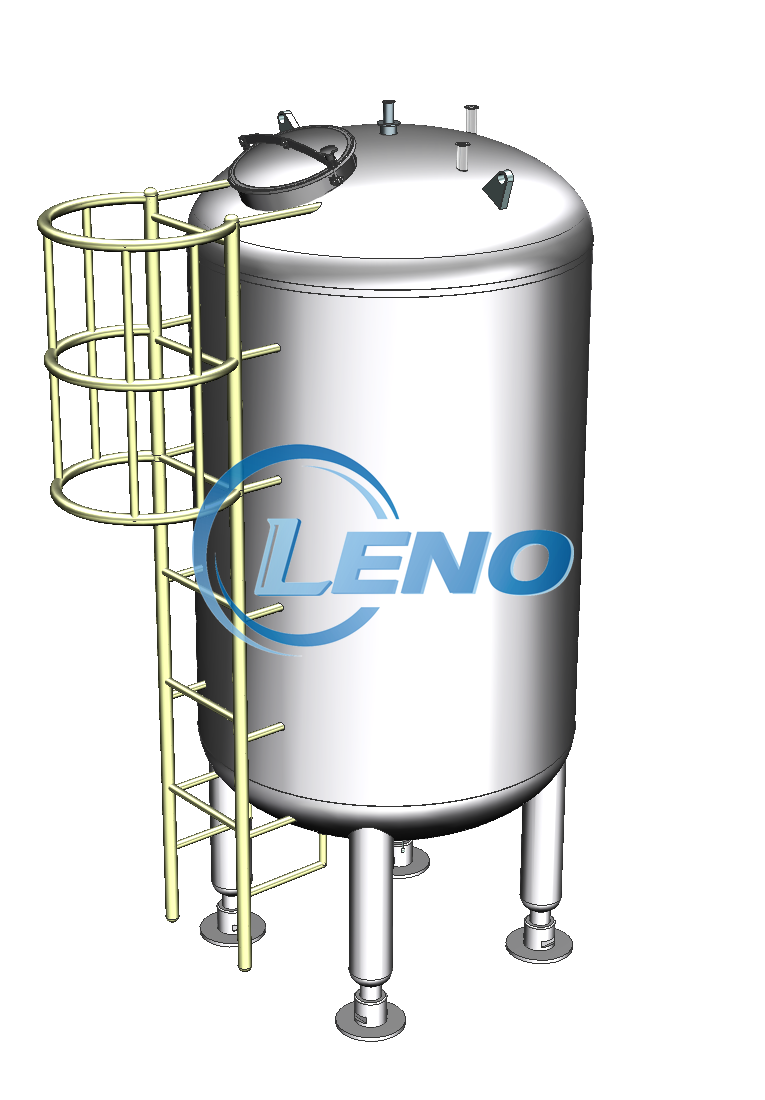
Tank geometry directly determines your operational efficiency. Bottom shapes matter immensely during processing. You need 100% product recovery during routine discharge. Efficient drainage also speeds up your sanitation cycles. Flat bottoms pool liquid and trap organic debris. Engineers offer several hygienic solutions to solve this problem:
Conical Bottoms: These feature steep angles (often 15 to 60 degrees) to force heavy slurries downward.
Sloped Bottoms: These angle slightly toward a side discharge port, ideal for liquid-only applications.
Dish Bottoms: These curved bottoms handle high pressure perfectly while maintaining smooth drainage.
Many products require strict temperature management. You should look for integrated thermal control features. Dimple cooling jackets protect temperature-sensitive products. They circulate liquid coolant efficiently around the vessel wall. Sanitary agitators are also absolutely essential. They prevent ingredient separation during long storage periods. A good agitator maintains product consistency perfectly. However, shear-sensitive products like yogurt require specialized, low-impact paddle designs. You must match the agitator blade to your specific recipe.
Connection points often harbor the most dangerous bacteria. We must explain the absolute necessity of Tri-Clamp (TC) fittings. You must choose these over traditional threaded fittings. Threaded connections are a strict non-starter in this industry. They trap bacteria deep inside the microscopic screw threads. You can never clean threads adequately during a standard wash cycle. Food grade applications ban threaded internal liquid fittings entirely.
Modern facilities rely heavily on automated cleaning. Evaluate how well the equipment integrates into your existing CIP system. Some advanced plants use SIP (Sterilize-in-Place) systems. Look for properly positioned spray balls inside the vessel. These devices spray cleaning chemicals in a full 360-degree pattern. They must ensure zero blind spots during the aggressive washdown cycle. Agitator shafts often create spray shadowing. Shadowed areas miss the chemical spray entirely. Engineers must place rotary jet heads carefully to eliminate these dangerous shadows.
Different industries require highly specific vessel engineering. A dairy operation differs heavily from a bulk chemical plant. You must understand these hard boundaries.
Breweries and dairies face unique processing challenges. We must highlight specific design needs for beverages. A typical beverage storage tank often requires high carbonation pressure ratings. It must safely hold pressurized gas without rupturing. Glycol jacketing is another absolute necessity. Brewers use chilled glycol for exact fermentation control. Dairies use it for rapid cold crashing. Without precise thermal jackets, beverages spoil quickly.
We must clarify an absolute safety boundary. You can never mix chemical and food applications. Some buyers try to repurpose equipment to save money. Even if a used chemical storage tank uses 316L stainless, it automatically fails inspection. It lacks critical 3-A sanitary certifications. Manufacturers build them using rough industrial-grade welds. They do not polish the interiors to safe Ra values. More importantly, repurposed tanks carry untraceable contamination risks. Heavy metals and toxic compounds hide indefinitely inside micro-fissures. No amount of harsh cleaning guarantees consumer safety. You risk severe brand damage by repurposing chemical vessels.
Installing a food grade storage tank safely requires strict protocols. Poor handling easily ruins an expensive vessel.
Stainless steel is not completely immune to rust. It relies on a microscopic chromium oxide layer. Food grade tanks must be chemically passivated upon installation. Facilities must also passivate them routinely thereafter. Technicians use nitric or citric acid treatments. This chemical process strips away embedded free iron. It rapidly restores the vital chromium oxide layer. Without regular chemical passivation, rust spots will inevitably develop.
Installation teams often make critical errors. We must warn against cross-contamination during facility installation. Contractors sometimes use carbon steel tools on stainless surfaces. Grinding discs previously used on carbon steel transfer iron particles. Airborne grinding dust from adjacent construction also poses severe risks. This causes iron embedding across your sanitary surface. Embedded iron triggers rapid, aggressive rusting. You must enforce strict tool separation protocols onsite.
Maintenance does not end after a successful installation. We emphasize the need for regular boroscope inspections. Technicians use tiny cameras to inspect internal welds periodically. They look for microscopic stress cracks or failing polish. You must also conduct regular testing of gasket integrity. Deteriorating rubber creates immediate, invisible contamination risks. Documenting these thorough inspections helps you maintain constant audit-readiness.
Sourcing a food grade storage tank represents a complex challenge. It is an exercise in strict risk mitigation. It focuses on absolute regulatory compliance. It is never just basic capacity procurement. One minor fabrication flaw jeopardizes your entire production run. You must prioritize hygienic design above all other metrics.
You must approach procurement systematically to ensure success. Follow these actionable next steps before finalizing your equipment selection:
Audit your specific product's pH and chloride levels to determine the correct alloy.
List all your required daily sanitation chemicals and cleaning temperatures.
Demand full material test reports (MTRs) from the tank manufacturer.
Verify 3-A or NSF sanitary certifications before ever issuing a purchase order.
These structured steps guarantee long-term operational safety. They protect your brand reputation from catastrophic product recalls.
A: No. While stainless steel naturally resists rust, "food grade" means much more. It refers strictly to specific alloys like 304 and 316. Fabricators pair these specific alloys with sanitary welding methods. They also apply highly polished finishes (like 32 Ra). These ultra-smooth surfaces prevent dangerous bacterial growth. Standard industrial stainless fails these stringent safety requirements completely.
A: It is not recommended for long-term storage. Acidic and high-chloride environments will eventually pit 304 stainless. The acid slowly eats through the protective chromium layer. A 316 stainless steel tank is the established industry standard here. The added molybdenum resists these harsh acids effectively.
A: With proper care, these vessels offer extreme longevity. Facilities must implement proper CIP protocols daily. You must also perform routine chemical passivation to restore the metal. If you select the correct alloy initially, a high-quality tank can easily last 20 to 30 years in a commercial facility.


