Language

Views: 0 Author: Site Editor Publish Time: 2026-07-14 Origin: Site


Purchasing commercial distillation equipment represents the most critical capital expenditure for a scaling or new distillery. You are not just buying metal. You are investing in the absolute heartbeat of your production facility. Choose poorly, and you risk severe operational bottlenecks down the line. The wrong configuration can heavily compromise your spirit's delicate flavor profiles. It can also force you into expensive, stressful facility retrofits later. We understand these high stakes perfectly. We want to help you avoid common industry pitfalls from day one. This article provides a clear, evidence-based framework for evaluating hardware. We base this evaluation framework on your target spirit, production volume, and facility constraints. You will learn exactly how to match still architecture to your operational goals. We will guide you through crucial material selection and proper facility preparation. Let us build a highly scalable, reliable foundation for your growing brand.
Spirit-Specific Configurations: The choice between a whiskey distiller, vodka distiller, or brandy pot still fundamentally alters the required column height, plate count, and copper contact.
Material Matters: Copper is non-negotiable for vapor interaction (sulfur stripping) in brown spirits, while stainless steel offers structural durability and cost efficiency for columns and boilers.
Infrastructure Precedes Equipment: Heating methods (steam vs. electric) and facility limits (ceiling height, cooling capacity, safety compliance) must be validated before shortlisting vendors.
Hybrid Solutions Offer Flexibility: Distilleries aiming to produce both high-proof neutral spirits and flavorful whiskies should evaluate hybrid stills, weighing versatility against batch-time efficiency.
To succeed commercially, you must first define extremely clear production goals. Establish baseline metrics before you even open a vendor catalog. Determine your target output in proof gallons per year. Alternatively, you can calculate liters of absolute alcohol. This baseline metric dictates your necessary boiler capacity. It also determines your required batch frequency. A clear target prevents you from under-sizing or wildly over-sizing your initial setup.
Before selecting your distillation equipment, you must evaluate your facility infrastructure. Many craft distillers unfortunately ignore their building limits. They order large equipment and face costly installation surprises. You must conduct a thorough site audit immediately. Follow these critical steps to assess your building:
Measure ceiling height restrictions: Tall columns demand significant vertical clearance. A multi-column setup requires even more headroom for piping and maintenance access. Ensure you have clearance above the highest dephlegmator.
Calculate cooling water capacity: Condensers require massive amounts of extremely cold water to knock down vapor. Check your municipal flow rates carefully. Verify your drainage limits to avoid flooding your production floor.
Review safety compliance: Distilleries handle highly flammable ethanol vapors daily. You must comply strictly to local zoning and fire safety laws. Ensure your production space explicitly meets C1D1 (Class 1, Division 1) or ATEX environmental safety standards.
Next, select your heating source carefully. You have three primary options available today. Each heating method impacts your infrastructure and daily operations differently.
Heating Source Comparison Chart | |||
Heating Source | Best Application | Primary Advantages | Notable Disadvantages |
|---|---|---|---|
Steam Heating | Large volumes, thick grain mashes | Provides even heat distribution; completely prevents scorching. | Requires an expensive, specialized external steam boiler setup. |
Electric (Bain-Marie) | Small to mid-sized craft setups | Offers lower upfront infrastructure costs; simplifies installation greatly. | Draws heavy electrical amperage; results in slower heat-up times. |
Direct Fire | Traditional or heritage methods | Delivers authentic heritage appeal; provides high heat intensity. | Carries significantly higher safety risks and mash scorching potential. |
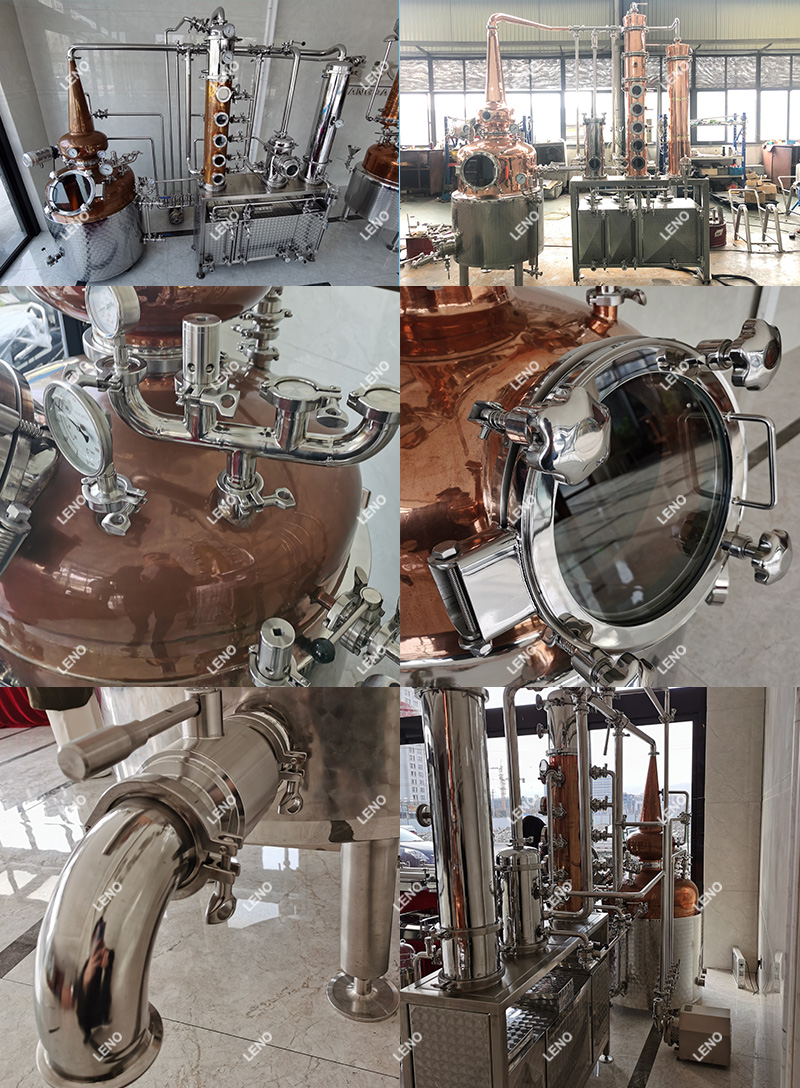
Brown spirits demand careful, intentional flavor management. You want to retain heavy congeners from your complex grain mashes. These specific compounds give the final spirit its deep, rich character. A dedicated whiskey distiller requires specific architectural features to succeed.
You will usually choose a traditional copper pot still design. Alternatively, you can specify a hybrid system featuring a relatively short column. This specific column typically holds just three or four physical plates. You need maximum copper contact inside the helmet and lyne arm. Copper actively acts as a chemical catalyst here. It efficiently strips foul-tasting sulfur compounds directly from the hot vapor.
Best Practice: If you plan to distill directly on the grain, you must install specialized motor agitators. Agitators keep the thick, heavy mash moving constantly. They prevent disastrous scorching along the inner boiler walls.
Producing neutral spirits requires incredibly aggressive purification techniques. You must achieve an extremely high proof consistently. The industry standard requires reaching at least 95% ABV or 190 proof. You also need a completely clean, neutral flavor profile.
To hit these exact marks, a standard pot still will fail completely. You need a highly specialized vodka distiller. We typically recommend utilizing tall column stills. Large-scale commercial producers often utilize complex multi-column continuous systems.
These sophisticated systems demand extremely high plate counts. Expect to specify anywhere from 16 to 30 bubble cap plates. More plates mean higher purification and higher proof. Active dephlegmators are also absolutely critical. They sit securely at the top of the column. They allow precise, real-time reflux control. You can precisely manage what vapor passes upward and what liquid falls back down.
Fruit ferments present highly unique distillation challenges. You must preserve delicate, highly volatile fruit aromatics during the run. A poorly designed system will strip these beautiful flavors away instantly.
A classic brandy pot still solves this flavor problem perfectly. Most premium producers rely on traditional Alembic designs. Many also prefer the proven French Charentais-style setup. These systems use highly specific, calculated helmet shapes. You will often see wide onion or large spherical domes. These specific shapes naturally control ascending vapor speed. They encourage gentle, passive reflux without stripping the character.
Common Mistake: Do not overlook the boiler discharge valve. Fruit ferments always leave heavy, sticky solids behind. You absolutely need large-diameter discharge valves. Small valves will clog constantly and ruin your daily production schedule.
Material selection directly impacts your spirit quality and your total budget. You must thoroughly understand the distinct chemical roles of different metals.
Copper plays an essential, non-negotiable chemical role. It is strictly necessary throughout the entire vapor path. During active fermentation, yeast naturally produces highly volatile sulfur compounds. Dimethyl trisulfide is a very common offender here. It smells terribly like rotting vegetables or cabbage. Copper binds chemically to these aggressive sulfur molecules. It successfully removes them from your final bottled product entirely.
Stainless steel serves a different, structural, and economic purpose. You should specify 304 or 316L grade stainless steel for boilers. It also works perfectly for tall structural columns and outer heating jackets. Using stainless steel significantly reduces your initial upfront costs. It heavily improves overall structural integrity for massive setups. It also simplifies your CIP (Clean-in-Place) procedures immensely. Stainless steel withstands harsh, caustic cleaning chemicals much better than soft copper.
We highly recommend strategic material blending. Modern, profitable craft distilleries thrive on mixed-material equipment. A stainless steel boiler provides incredible physical durability. You pair it smartly with a copper helmet and pure copper column plates. This hybrid approach offers a very pragmatic, cost-effective standard. You get the essential chemical benefits of copper exactly where needed. You save significant capital everywhere else.
You must plan properly for growth from day one. Do not buy a small system you will outgrow in twelve months. Carefully evaluate your internal automation capabilities early. Manual analog controls work fine for seasoned, traditional distillers. However, they demand constant, unwavering human attention. Automated PLC (Programmable Logic Controller) systems offer distinct, measurable advantages. They deliver perfectly repeatable batch profiles every single time. They execute automated heads and tails cuts flawlessly. But remember, PLC systems require a much higher upfront investment. They also demand specialized local maintenance if tricky software issues arise.
Integration of a robust CIP system is practically mandatory. CIP stands for Clean-in-Place. You cannot manually scrub a twenty-foot column safely. Detail the strict necessity of integrated spray balls during your design phase. Place high-pressure spray balls inside the main boiler. Add them inside the copper helmet. Install one between every single column plate. This specific setup drastically minimizes turnaround time between your daily batches.
Beware of common, expensive implementation risks. Equipment rollout failures happen quite frequently. Underestimated manufacturing lead times routinely delay grand openings. Mismatched electrical voltage or phase requirements will ruin expensive agitator motors instantly. You must also formally verify your floor load-bearing capacity. Filled distillation equipment weighs many thousands of pounds. A weak, unreinforced concrete slab will crack dangerously under the heavy pressure.
Best Practice: Always hire a licensed structural engineer. Have them assess your concrete slab professionally before signing any equipment contracts.
Selecting a manufacturing vendor requires incredibly strict diligence. You must move far beyond simply comparing baseline prices. Evaluate potential manufacturers based on verifiable engineering blueprints. Assess their proven custom fabrication capabilities thoroughly. Demand strict, documented adherence to ASME or CE pressure vessel standards. These specific global certifications ensure perfectly safe operation under high pressure and heat.
Post-sale support matters just as much as the initial build quality. Demand total clarity on long-term replacement part availability. Rubber gaskets, glass sight glasses, and electrical heating elements degrade naturally over time. You need replacement parts shipped quickly. Domestic technical support is also incredibly valuable. You cannot afford to wait days for an email response across distant global time zones.
We strongly advise all buyers to require an official FAT. FAT stands for Factory Acceptance Test. Do this in person or via live video before the manufacturer ships the unit. During the FAT, you will verify crucial weld quality visually. You will test the system's pressure integrity safely via hydrostatic testing. You will also rigorously ensure the electronic control panel functions flawlessly.
Use this simple, actionable checklist for your initial manufacturer consultation:
Bring detailed, professionally drafted architectural floor plans.
Provide precise utility capacities including water flow rates and electrical service limits.
Share your complete, finalized target spirit portfolio.
Confirm expected delivery timelines and installation dates in writing.
Your distillation setup functions as a permanent operational partner. The architectural choices you finalize today heavily define your commercial ceiling tomorrow. A dedicated brandy setup severely limits neutral spirit production. A tall vodka column visibly struggles to retain heavy, desirable whiskey flavors. A hybrid setup provides excellent versatility but alters your daily batch-time efficiency.
We strongly urge all buyers to finalize their spirit portfolio early. Conduct complete, thorough facility utility audits before signing any binding purchase orders. Proactive planning easily avoids highly costly retrofits down the line.
Take the next logical step toward scaling your production today. Download our comprehensive buyer's checklist online. Request a detailed custom sizing consultation from our expert engineering team. You can also view our specific, technical equipment specifications online to find your perfect commercial match.
A: Yes, you can achieve this easily by utilizing a hybrid still equipped with clever bypass valves. Operators can route the hot vapor through a short section of the column for flavorful whiskey. When you need high-proof vodka, you simply engage all the tall column plates to maximize reflux and purification.
A: Custom fabrication generally takes four to eight full months. The exact timeline depends heavily on overall system complexity. Manufacturer production backlogs and complicated international shipping logistics also play a significant role. Always factor these extended lead times into your initial business plan.
A: With strict CIP protocols and regular maintenance, the stainless steel components will last for decades. However, copper components reside in high-wear areas like the active vapor path. They slowly erode over 10 to 20 years chemically. These specific copper sections may eventually require minor patching or complete replacement.
A: Not strictly. Steam represents the ultimate industry standard for sizes above 500 liters due to its incredibly even heat distribution. However, bain-marie (water or oil jacketed) electric elements are highly effective. They remain perfectly compliant and highly efficient for smaller or mid-sized craft distillery operations.


