Language

Views: 0 Author: Site Editor Publish Time: 2026-07-17 Origin: Site


Upgrading or investing in a new still represents a heavy capital expense for any facility. Choosing the wrong material impacts your daily operational workflow deeply. It also fundamentally changes the final quality of your end product. The debate between traditional copper and modern stainless steel persists across the industry. However, this debate is not about finding a universally superior metal. Instead, you must match specific material properties to your distinct production goals. Equipment choices must align with regulatory compliance standards and your available maintenance bandwidth.
Before committing your budget, operators must strip away flashy marketing claims. We need to strictly evaluate the undeniable chemical and physical realities of each material. You will learn exactly how chemical reactivity shapes flavor profiles. You will discover why durability matters for facility scaling. Finally, we will explore how hybrid systems balance upfront costs with long-term performance.
Chemical Reactivity: Copper naturally binds with sulfur compounds during distillation, a critical requirement for traditional flavor profiles in whiskey and rum.
Durability & Neutrality: Stainless steel is practically indestructible, easy to sanitize, and chemically inert—making it the ideal baseline for an essential oil distiller or neutral spirit production.
Cost vs. Maintenance: Stainless steel offers a lower barrier to entry and minimal upkeep, while copper requires higher upfront costs and rigorous, ongoing chemical cleaning to maintain efficacy.
The Hybrid Reality: Most modern operators achieve optimal results by pairing a stainless steel boiler with copper columns or copper packing, balancing durability with flavor control.
The "best" material is entirely dictated by what you intend to distill. Material choice directly controls flavor fidelity. It also establishes absolute product purity. You cannot force a metal to perform outside its chemical limits. A mismatched boiler ruins delicate botanical notes. Conversely, it might fail to strip harsh impurities from heavy grain mashes. Operators must define their product portfolio first. Your equipment selection must follow chemistry.
We must acknowledge a simple biochemical fact regarding brown spirits. Whiskey, brandy, and rum fermentations naturally produce foul-tasting sulfur compounds. Yeast metabolism generates these harsh byproducts when consuming sugars. Stressed yeast creates even higher levels of these off-flavors. You must remove them before the spirit reaches the bottle. This explains the absolute necessity of copper in the vapor path.
A dedicated craft spirits distiller relies heavily on this specific interaction. Copper chemically binds to these impurities. It actively strips out dimethyl trisulfide from the rising vapor. It neutralizes other offensive sulfur notes efficiently. The vapor must contact the metal surface long enough to react. This contact time guarantees a smooth, traditional flavor profile. Without it, your whiskey will taste incredibly sharp and unpalatable.
Botanicals and neutral spirits require a completely different approach. High-proof vodka and gin demand absolutely neutral environments. You must prevent unintended chemical reactions at all costs. Stainless steel remains perfectly inert during distillation. It does not react with volatile organic compounds.
An essential oil distiller must protect delicate floral notes. Lavender, peppermint, and eucalyptus contain highly volatile plant molecules. Exposing them to reactive metals alters their scent profile. Reactive environments can chemically degrade expensive essential oils. Stainless steel guarantees absolute aroma fidelity. What you put into the boiler is exactly what you extract.
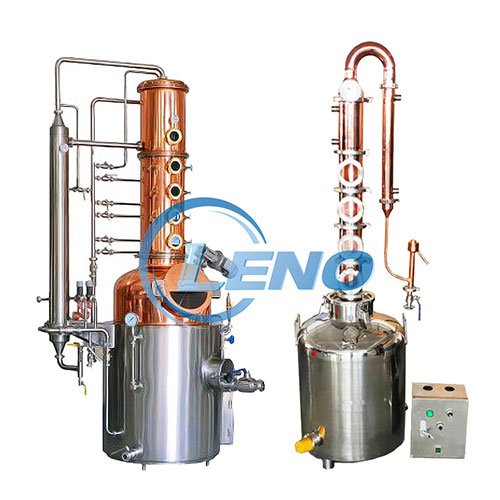
Traditional materials hold their place in modern facilities for very specific reasons. Understanding the thermal and chemical properties of copper helps clarify its high value.
Copper boasts exceptional thermal conductivity. It heats up incredibly fast compared to other metals. It also disperses heat evenly across the entire boiler surface. This physical property prevents the severe scorching of thick grain mashes. It protects delicate botanicals from localized burning along the bottom plate. Excellent thermal conductivity means less energy waste overall. The system responds rapidly to minor temperature adjustments. Operators gain precise control over the entire distillation run. You can push the boiler temperatures hard without burning the grain bed.
Copper acts as a powerful chemical sponge. It reacts violently with sulfur molecules present in the vapor. This reaction forms copper sulfate. The still leaves this blue-green residue behind inside the column. The purified vapor continues cleanly up the system.
However, we must address the implementation reality. Because copper is highly reactive, the metal literally wears away over time. A copper distiller slowly sacrifices its own mass during every run. The interior walls become thinner after years of heavy commercial use. Operators must factor in eventual equipment replacement. They must plan for patching thin spots routinely. This represents a long-term operational cost. It is the mandatory price of exceptional flavor control.
We cannot ignore the marketing power of traditional equipment. Copper presents an authoritative, historical look. It holds tangible value for commercial distilleries. Many facilities offer public tours daily. They emphasize brand heritage and artisanal craftsmanship. Gleaming copper columns create a stunning visual impact for visitors. Investors love the classic distillery atmosphere. Customers perceive higher quality when they see traditional equipment. This visual branding often justifies the higher maintenance efforts required.
Modern production facilities often prioritize uptime and efficiency. Industrial alloys offer clear advantages for scaling operations rapidly.
Stainless steel offers unmatched durability. Manufacturers typically use 304 or 316 grade alloys for commercial systems. These dense materials will outlast softer metals by decades. They suffer virtually zero material degradation over their lifespan. A stainless steel distiller represents a permanent facility asset. You buy the equipment once. It performs reliably for multiple generations of distillers.
Cleanliness dictates facility success and regulatory survival. Stainless steel features a hard, non-porous surface. It is highly resistant to aggressive cleaning acids. It easily withstands caustic industrial chemicals. This resilience makes daily sanitation fast and highly effective.
Food-grade facilities strongly prefer this material for compliance reasons. It is much easier to meet strict local health standards. Inspectors favor the cleanability of stainless surfaces. You easily eliminate hidden bacterial growth pockets. The smooth interior prevents organic matter buildup.
We must acknowledge the inherent drawbacks of this durable alloy. Stainless steel offers extremely poor heat dispersion. Manufacturers often require a thicker clad bottom on the boiler. This added thickness helps prevent localized mash scorching. Furthermore, the metal offers zero sulfur-reducing capabilities out of the box. You cannot use a bare stainless setup for traditional whiskey. The harsh sulfur notes will pass directly into your final spirit unhindered.
We must evaluate these materials across daily operational realities. Use the comparison dimensions below to understand the stark operational differences. Clear data prevents costly purchasing mistakes.
Evaluation Dimension | Copper Equipment | Stainless Steel Equipment |
|---|---|---|
Chemical Reactivity | High. Strips sulfur naturally. | None. Completely inert environment. |
Thermal Control | Excellent heat dispersion. Responds quickly. | Poor heat dispersion. Prone to hot spots. |
Cleaning Effort | Labor-intensive manual scrubbing required. | Fast. Supports automated CIP processes. |
Lifespan | Finite. Sacrifices metal mass over time. | Practically infinite under normal use. |
Your team will spend significant time cleaning. You must understand the labor requirements for each metal.
Copper: This metal requires labor-intensive cleaning routines. You must perform regular citric acid washes. Vinegar runs help strip stubborn oxidation. You have to scrub away built-up sulfates manually. If you ignore this, the metal stops reacting with sulfur completely. Every hour spent scrubbing is an hour lost for distilling.
Stainless: This alloy supports aggressive CIP (Clean-In-Place) systems. CIP systems use spray balls permanently mounted inside the tanks. Operators simply pump a heated alkaline solution through the system. The spray balls blast every internal surface automatically. Rapid sanitization occurs with minimal physical labor. You simply rinse the system and move to the next batch.
Financial planning requires looking past the initial price tag.
Copper: You face a very high initial purchase price. Long-term maintenance costs remain consistently high due to specialized cleaning chemicals. You also face lower resale depreciation. The metal physically thins out over time, reducing its secondary market value.
Stainless: The material proves highly cost-effective upfront. You experience virtually zero replacement cost over the system's lifespan. Maintenance labor costs remain incredibly low. The equipment holds strong resale value because the metal does not degrade.
Stainless systems heavily utilize Tri-Clamp (TC) fittings. These universal sanitary fittings allow operators to easily add new components. You can attach sight glasses in minutes. You can insert specialized gin baskets between production runs. Column extensions bolt on seamlessly using basic hand tools. This extreme modularity lets the business scale upward without buying entirely new boiler systems.
You do not have to choose just one extreme. Many distillers successfully bridge the gap without sacrificing product quality. Hybrid systems represent the modern industry standard for commercial profitability.
Hybrid setups merge the best physical traits of both materials. They eliminate the most painful maintenance aspects of traditional equipment. At the same time, they preserve the vital chemical reactions necessary for premium spirits.
The operational logic is straightforward. You start by using a heavy-duty stainless steel boiler. This provides extreme durability where the heat source applies maximum stress. It ensures easy cleaning of the messy grain bed. It maximizes upfront cost-efficiency. You then pair this durable boiler with a traditional copper column. Alternatively, you can pack a stainless column tightly with pure copper mesh.
This specific setup provides the necessary copper-vapor contact time. It successfully eliminates unwanted sulfur compounds from the rising vapor. Meanwhile, it isolates the heavy wear-and-tear effectively. You strictly limit chemical degradation to easily replaceable components. Swapping out degraded copper mesh costs very little. You avoid destroying an expensive solid copper boiler over time. This targeted hybrid approach dominates modern commercial distilling.
Decision paralysis often delays facility upgrades. Use the structured framework below to finalize your equipment material strategy.
Choose 100% Copper if: Authenticity matters above all else. You produce traditional brown spirits exclusively. Visual appeal for investors and daily public tours represent primary success criteria for your brand.
Choose 100% Stainless Steel if: You run an essential oil extraction system. You distill high-proof neutral grain spirits or vodka. You currently operate under strict budget limitations and need maximum durability.
Choose a Hybrid System if: You operate a modern craft facility. You require high versatility to produce multiple spirit types. You want manageable daily maintenance routines. You need a scalable architecture built on Tri-Clamp fittings.
Evaluate your current facility footprint today. Clarify your primary product line before signing any purchase orders. Review various modular system configurations online. Start building a custom setup tailored exactly to your chemical and financial needs.
We must reiterate a core industry truth. Neither material is inherently flawed or universally perfect. The true failure always lies in mismatching the equipment to the business objective. Do not let aesthetic preferences ruin your daily production efficiency.
Base your final investment strictly on the chemical requirements of your wash or mash. Calculate the realistic maintenance hours your team can actually commit to daily. A beautiful still loses its charm if it requires ten hours of weekly scrubbing.
Direct your next steps wisely. View specific equipment specifications from trusted manufacturers. Contact a sizing specialist for a bespoke consultation. They will evaluate your facility requirements and recommend the perfect configuration.
A: Yes, provided you introduce copper into the vapor path. Bare stainless steel will not remove foul-tasting sulfur compounds produced during fermentation. You must add copper mesh packing or install copper plates inside the column to neutralize these off-flavors successfully.
A: Copper oxidizes easily and builds up thick copper sulfate residue from reacting with the wash. It requires acidic solutions like citric acid and intense physical scrubbing to expose fresh, reactive copper for the next run. Stainless steel simply needs standard food-safe sanitizers.
A: It is generally not recommended. Copper can chemically react with certain volatile organic compounds found in botanicals. This potentially alters the delicate scent profile or degrades the final oil. Stainless steel or glass remains the industry standard for essential oil extraction.
A: Yes. Because it is a highly reactive metal, it strips sulfur by shedding microscopic layers of itself during every run. Heavily used copper parts will eventually thin out completely. Operators must anticipate replacing these components, especially in high-volume commercial environments.


