Language

Views: 0 Author: Site Editor Publish Time: 2026-06-21 Origin: Site


Modern biopharmaceutical manufacturing demands strict zero-contamination environments. Every single process step matters in drug production. Traditional top-mounted mechanical seals introduce serious friction risks into the process line. They pose ongoing wear and particulate shedding threats. These inherent mechanical issues can easily jeopardize high-value therapeutics and ruin entire batches. Facility operators must mitigate cross-contamination to maintain absolute product safety. Stringent regulatory compliance requires seamless cleanability across all process equipment. Upgrading your mixing hardware addresses these immediate engineering challenges directly. We will explore the critical transition toward magnetic coupling technology in fluid processing. You will learn how replacing legacy shaft systems protects sensitive biological liquids. This article explains the core engineering considerations for optimal fluid handling. It covers essential design aspects needed for smooth cGMP integration. Readers will discover practical limitations regarding viscosity and fluid behavior. We will also guide engineering teams through the right procurement strategies.
Replacing mechanical seals with magnetic drives eliminates the primary source of particulate contamination and microbial ingress in liquid processing.
Bottom magnetic mixing tank configurations maximize product recovery in high-value biologic and API batches by allowing agitation at critically low volumes.
Selecting the right pharmaceutical mixing tank requires aligning magnetic torque capacity with specific fluid viscosities and CIP/SIP validation requirements.
While highly effective for aqueous solutions and suspensions, magnetic mixers have strict viscosity limitations that must be evaluated during the scale-up phase.
Facility managers scrutinize every new equipment upgrade carefully. Transitioning to advanced magnetic mixing technologies brings substantial operational returns. You must look beyond the initial purchase price. True financial ROI emerges from highly improved daily processing routines. Advanced agitation systems remove complex moving parts from the sterile zone. This fundamental design shift delivers measurable benefits across production metrics.
Eliminating mechanical shafts allows mixing down to the last drop. Traditional central shafts require significant fluid depth to operate safely. They often cavitate when liquid levels drop too low. Eliminating this central shaft changes the dynamic entirely. Operators can continue safe agitation until the vessel is virtually empty. This dramatically reduces product hold-up inside the vessel. You avoid wasting expensive high-value batches. Biologics and active pharmaceutical ingredients often cost thousands of dollars per liter. Saving even a small percentage boosts your overall batch profitability immensely.
Mechanical seals consume excessive electrical power during continuous operation. They also require constant barrier fluid monitoring by your technicians. Maintenance teams spend countless hours on routine seal replacements. Upgrading to a magnetic mixer tank eliminates these repetitive maintenance tasks. Magnetic drives lack direct physical shaft connections. This significantly reduces rotational friction and lowers overall energy consumption. You gain highly predictable maintenance schedules for the facility. Overall production uptime increases because unscheduled breakdowns decrease.
Batch contamination represents a catastrophic financial loss for any manufacturer. It wastes incredibly valuable raw materials and delays critical market releases. The cost of a single ruined batch is massive. It easily eclipses the upfront capital expenditure of modern mixing equipment. Upgrading isolates the internal fluid path completely from the outside environment. You remove the mechanical seal failure risk permanently. Your operators can confidently process highly sensitive therapeutics without fearing sudden ingress events.
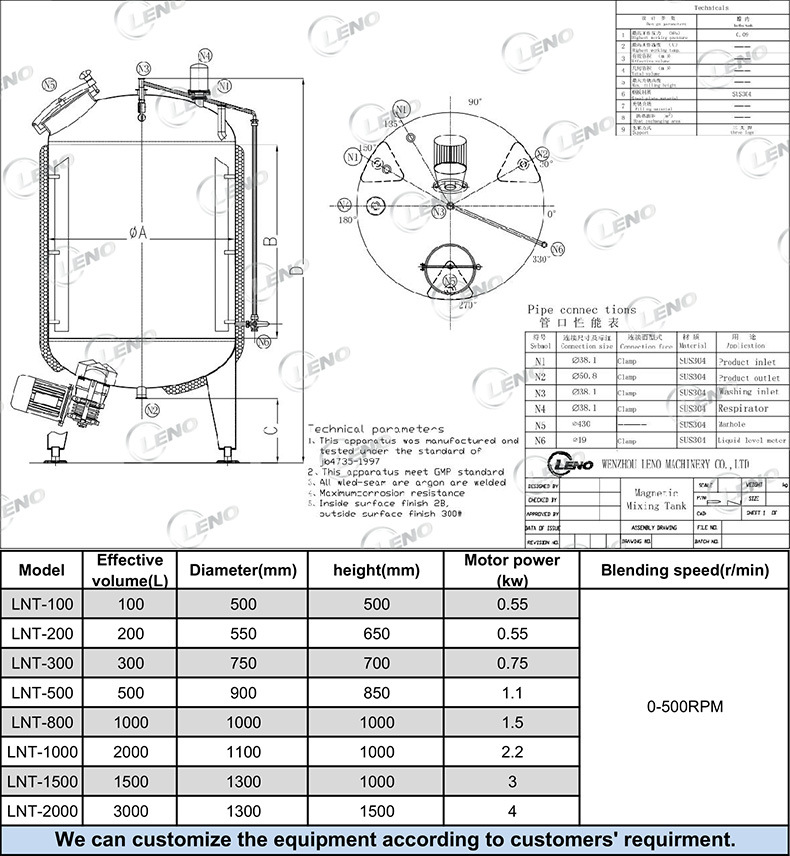
Biopharmaceutical plants handle exceptionally delicate fluids daily. Each manufacturing phase demands specific agitation profiles to succeed. Magnetic drive technology perfectly aligns with these diverse operational requirements. It provides the precision necessary for complex pharmaceutical formulations.
Facilities constantly prepare buffers and culture media for upstream processing. You must rapidly blend dry powders into sterile liquids. The process must achieve homogenous results very quickly. However, excessive shear forces easily degrade sensitive media components. Magnetic mixers provide highly efficient fluid turnover rates. They pull floating powders down into the vortex without aggressive shear. Operators achieve perfect dissolution without destroying the molecular integrity of the media.
Vaccine production and cell culture scale-up require a highly sterile environment. Any microbial ingress destroys the entire formulation immediately. Zero-leakage magnetic coupling creates an absolute physical barrier. It completely protects the batch from external atmospheric contaminants. Gentle agitation keeps fragile mammalian cells suspended securely. The cells do not experience fatal mechanical stress. This gentle handling ensures higher cell viability and better final titer yields.
Final packaging phases present unique engineering challenges. Active Pharmaceutical Ingredients (APIs) often settle out of suspension quickly. You need continuous agitation during the final draining sequence. Traditional top-mounted mixers cavitate violently at low fluid volumes. A bottom magnetic mixing tank solves this precise problem elegantly. The impeller rests directly at the lowest geometric point. It maintains the required suspension until the vessel drains completely. This ensures highly consistent API dosing throughout the entire filling run.
Compliance defines modern pharmaceutical engineering and procurement. You cannot deploy equipment lacking proper validation documentation. Your vessels must meet the strictest cleanability standards available today. Engineering teams must evaluate every internal feature meticulously.
Microbes thrive aggressively in hidden mechanical crevices. Dead legs provide perfectly safe havens for dangerous bacterial growth. Engineers must always demand flush-mounted weld plates. You need completely seamless internal vessel geometries. The total elimination of crevices stops microbial biofilms from forming. The magnetic drive plate sits perfectly flush against the inner wall. It creates a smooth, continuous surface. This flush integration guarantees superior sterility compared to bolted flanges.
Automated cleaning protocols rule modern production facilities. Automated workflows ensure repeatable hygiene between distinct product batches. Clean-in-Place (CIP) and Sterilize-in-Place (SIP) routines are mandatory.
The open impeller design allows completely unobstructed spray ball coverage.
High-velocity cleaning fluids wash every internal surface thoroughly.
Sterilizing steam reaches all vital contact points beneath the impeller hub.
Operators do not need to disassemble the drive unit manually between runs.
A properly specified sanitary mixing tank streamlines your validation procedures. Quality assurance teams rely heavily on riboflavin testing to confirm total CIP coverage. Advanced magnetic geometries pass these stringent tests effortlessly.
Equipment features must strictly align with recognized industry standards. FDA and cGMP regulations govern material safety and process controls. ASME BPE standards dictate exact bioprocessing equipment design geometries. All wetted elastomers, such as O-rings, must meet USP Class VI certifications. You must maintain complete material traceability for every single component. Reputable vendors should provide comprehensive documentation packages upon delivery. This paperwork is vital during official regulatory audits.
Procurement teams face numerous technical choices during the buying cycle. Selecting the right specifications guarantees long-term operational performance. You must evaluate construction materials, magnetic torque, and impeller styles carefully. These choices directly dictate your process capabilities.
Corrosion resistance is absolutely non-negotiable in bioprocessing. Specify 316L stainless steel for all wetted vessel parts. This high-grade alloy prevents rouge formation in high-purity water systems. Surface roughness directly impacts your overall cleanability. Establish a strict baseline requirement for the internal finish. Demand electropolished surfaces rated at Ra ≤ 0.4 µm. Microscopic smoothness actively prevents sticky product adhesion. It allows standard cleaning chemicals to perform optimally. A smoother surface drastically reduces the required CIP cycle time.
Coupling strength determines the maximum mixing capability. You must perfectly match torque to your target batch volumes. Fluid density also heavily dictates the necessary power requirements. Stronger rare-earth magnets handle larger liquid volumes easily. Discuss decoupling safeguards thoroughly during initial vendor meetings. What happens if fluid viscosity spikes suddenly during a reaction? The impeller might detach from the external magnetic field. Good designs allow the impeller to drop safely into a cradle. The drive motor senses the load change and stops automatically. This smart mechanism prevents severe equipment damage.
Below is a typical summary chart for matching torque to vessel volume. Use it as a baseline reference during vendor evaluations.
Magnetic Mixer Torque Selection Chart | |||
Working Volume (Liters) | Max Fluid Viscosity (cP) | Recommended Torque Rating | Typical Application Use Case |
|---|---|---|---|
50L - 200L | Up to 300 cP | Low Torque Drive | Small scale buffer prep, pilot plants |
200L - 1,000L | Up to 500 cP | Medium Torque Drive | Media preparation, vaccine formulation |
1,000L - 5,000L | Up to 800 cP | High Torque Drive | Commercial scale API blending |
5,000L+ | Up to 1,000 cP | Ultra-High Torque Drive | Large volume bioreactor media storage |
Impeller geometry matters immensely for product stability. Different pharmaceutical products possess vastly varying shear sensitivities. Evaluate the blade geometries based strictly on your specific formulation. Choose low-shear foil designs for handling delicate mammalian cell lines. Select high-vortex radial designs for achieving rapid powder dissolution. Mixing speed alone does not determine the shear rate. The actual blade shape dictates how the fluid folds and flows. Discuss your specific shear thresholds with the manufacturer early in the design phase.
No technology solves every single engineering challenge perfectly. Magnetic drives possess specific physical constraints due to their design. You must acknowledge these practical limitations upfront. Transparent technical evaluations prevent costly deployment errors later. Overlooking these factors leads to severe process bottlenecks.
Magnetic mixers rely entirely on invisible magnetic force fields. They are highly effective for most standard aqueous solutions. They excel at suspending light particles in liquid media. However, they are generally unsuitable for processing heavy materials. Highly viscous ointments resist magnetic rotation strongly. Thick gels and heavy cosmetic pastes quickly exceed established torque limits. Transparent limitations keep your production expectations realistic. Always respect the established viscosity ceiling of the equipment. Pushing beyond these limits causes repeated decoupling events.
Laboratory success does not guarantee immediate production success. The relationship between pilot-scale and commercial-scale mixing is non-linear. As tank volumes increase, internal fluid dynamics change dramatically. Vortex formation behaves very differently in a large pharmaceutical mixing tank. Baffle placement becomes incredibly critical at higher volumes. You must perform rigorous computational fluid dynamics (CFD) modeling. Address these vortex changes early during the scale-up phase. Failure to model fluid behavior causes uneven blending zones.
Facilities often want to save capital budget money. They sometimes consider upgrading their existing mechanical vessels. Retrofitting involves welding a new drive plate into an old shell. This approach carries substantial operational risks. Heat distortion from welding can warp the vessel bottom severely. Existing tank geometries might restrict proper vortex formation entirely.
Consider these integration steps carefully when deciding:
Evaluate the exact wall thickness of the existing vessel base plate.
Confirm there is sufficient physical clearance beneath the tank for the new external drive motor.
Assess the specific risk of weld warping and subsequent biological contamination.
Compare the required retrofit downtime against procuring a brand-new purpose-built tank.
Procuring a factory-validated vessel usually offers much safer outcomes. It guarantees precise bottom geometry and optimal magnetic alignment from day one. You avoid the hidden costs of unexpected fabrication delays.
Modern liquid processing requires absolute precision and cleanliness. Upgrading from traditional mechanical seals to modern magnetic drives offers incredible advantages. The final purchasing decision hinges on several critical operational factors. You must tightly balance strict sterility requirements against fluid viscosity. The overall product value heavily influences your final technological choice. Eliminating particulate shedding protects your most valuable liquid assets continuously. Bottom-mounted configurations ensure you maximize the final product yield.
Engineering and procurement teams must take decisive action today. Initiate detailed vendor discussions immediately regarding your facility needs. Prepare a comprehensive User Requirement Specification (URS) before requesting quotes. Detail your maximum anticipated fluid viscosity explicitly in the document. Define the exact working volumes for every product phase. Outline your specific CIP/SIP testing protocols very clearly. This rigorous preparation ensures vendors propose the exact right technology. Careful pre-planning guarantees a seamless and fully compliant installation.
A: Magnetic drives perform best with standard aqueous solutions and light suspensions. They have a strict physical viscosity ceiling. They typically cap around 500 to 1,000 cP. The exact operational limit depends on specific torque ratings and impeller design. Highly viscous gels or heavy pastes will break the magnetic coupling field easily. You should utilize top-mounted mechanical mixers for very thick materials.
A: It simplifies the entire cleaning validation process significantly. There are no mechanical shafts creating dangerous blind spots. Removable or levitating impeller designs allow fluids to wash beneath the rotating hub. This facilitates comprehensive CIP spray ball coverage. The flush-mounted bottom weld plate completely eliminates dead legs. Microbes cannot find hidden crevices to form stubborn biofilms.
A: Yes, they are absolutely excellent for hazardous manufacturing environments. You must specify ATEX-certified magnetic drives during procurement. The zero-leakage design completely isolates the volatile fluid path from external components. Furthermore, the complete elimination of mechanical seal friction removes a major ignition source. This design provides a massive safety advantage over traditional shaft mixers.


